

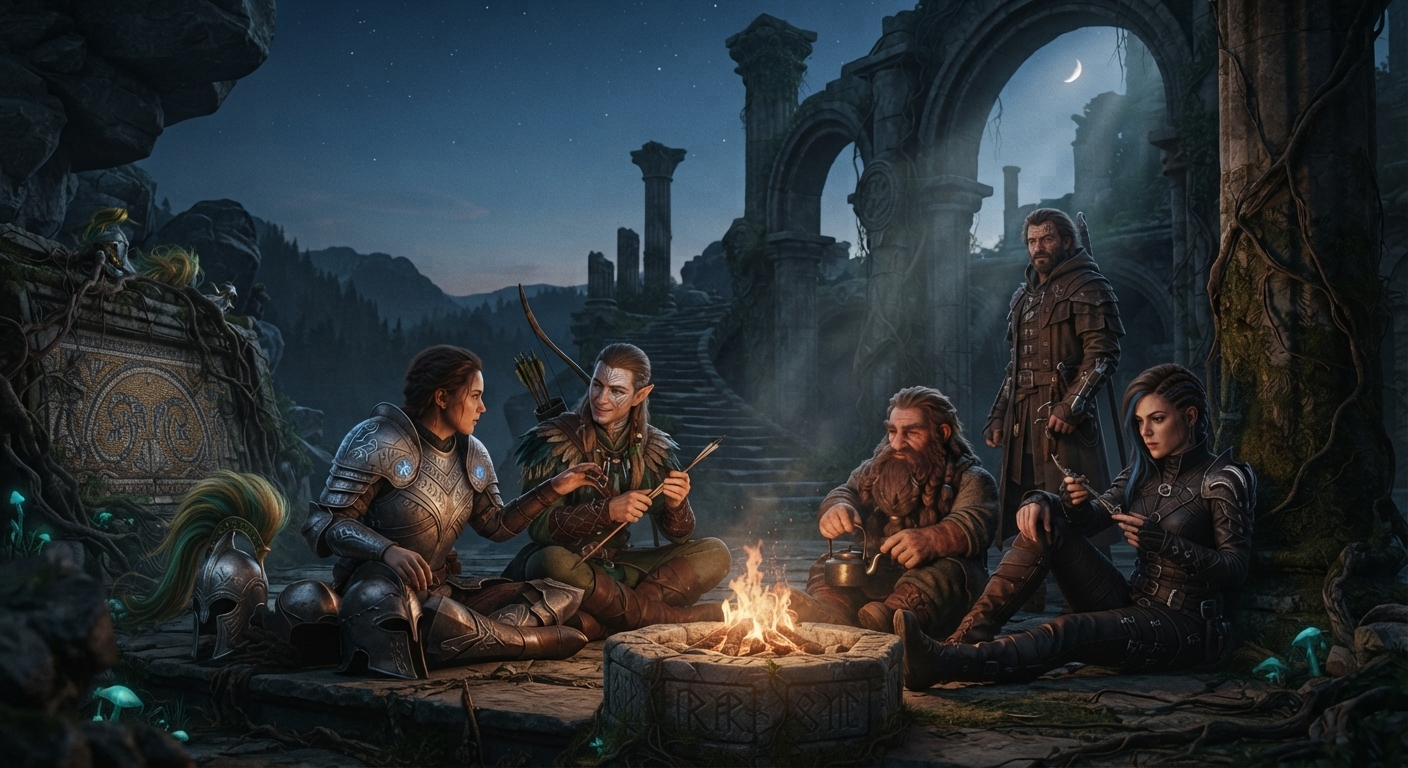
You finished Baldur’s Gate 3. You’ve played Dragon Age. You’ve become emotionally attached to fictional people who don’t actually exist.
Now what?
If you’re going to invest another 50+ hours into a game, you want to know it’s actually going to scratch that itch. You want memorable companions, meaningful choices, romance, character customization, storytelling, and a world that makes you want to keep exploring.
Because let’s be honest: sometimes you’re not looking for another RPG.
You’re looking for another group of fictional people to become irrationally attached to.
Whether what you loved most about Baldur’s Gate 3 was the freedom to approach problems your own way, or what you loved about Dragon Age was getting to know your companions around the campfire, these six games offer something worth chasing.
QUICK PICKS
| Game | Best For | Romance | Choice Impact | Combat |
| Divinity: Original Sin 2 | BG3 fans | ❤️❤️❤️ | ⭐⭐⭐⭐⭐ | Turn-based |
| Mass Effect Legendary Edition | Companion relationships | ❤️❤️❤️❤️ | ⭐⭐⭐⭐⭐ | Real-time |
| Pathfinder: Wrath of the Righteous | Deep choices & character builds | ❤️❤️❤️ | ⭐⭐⭐⭐⭐ | CRPG |
| Cyberpunk 2077 | Emotional character stories | ❤️❤️❤️ | ⭐⭐⭐⭐ | Real-time |
| GreedFall | Dragon Age fans | ❤️❤️❤️ | ⭐⭐⭐⭐ | Action RPG |
| Dispatch | Choices & relationships | ❤️❤️❤️❤️ | ⭐⭐⭐⭐⭐ | Narrative |
Not sure where to start?
If Baldur’s Gate 3 is your favorite: Start with Divinity: Original Sin 2.
If the companions are what you care about most: Play Mass Effect Legendary Edition.
If your favorite part is making choices that dramatically change the story: Try Pathfinder: Wrath of the Righteous.
If you want character-driven sci-fi: Play Cyberpunk 2077.
If you miss classic BioWare-style RPGs: Try GreedFall.
If you want relationships and choices without committing to another 100-hour RPG: Try Dispatch.
🎮 Divinity: Original Sin 2
Best for: Baldur’s Gate 3 fans who want even more freedom
If Baldur’s Gate 3 is the game you’re trying to replace, this is the obvious place to start.
Divinity: Original Sin 2 was developed by Larian Studios before Baldur’s Gate 3, and you can see the foundation for many of BG3’s ideas here. It features turn-based combat, highly interactive environments, origin characters, companion relationships, and an incredible amount of freedom in how you approach quests.
The game officially lets you choose from six origin characters or create your own character, with five playable races and an enormous amount of freedom in how you approach the world.
If you loved BG3:
The turn-based combat, environmental interactions, party composition, origin characters, and freedom will feel immediately familiar.
The biggest difference is that Divinity is rougher around the edges. It doesn’t have the same cinematic presentation or facial animations as Baldur’s Gate 3, but in some ways it gives you even more freedom to experiment with the world.
If you loved Dragon Age:
The companion relationships and personal quests give you that same feeling of traveling with a party of people you gradually become attached to.
❤️ Characters You’ll Love
Loved Astarion? Try Sebille.
Both characters have histories involving enslavement, manipulation, and trauma, and both initially use a sharp, sometimes cruel exterior to protect themselves.
Sebille isn’t simply “Astarion in Divinity,” but players who enjoyed Astarion’s character arc may find her particularly compelling.
Loved Gale? Try Fane.
Both are intelligent, arrogant, lore-heavy characters who can initially come across as condescending before revealing a much more vulnerable side.
Fane also gives you something Gale doesn’t: the opportunity to explore the world’s history through a character who literally predates the civilization you’re exploring.
Loved Lae’zel? Try Ifan Ben-Mezd.
They’re very different personalities, but both have strong ties to military structures and must confront the consequences of following orders.
Loved Sera? Try Lohse.
Both are cheerful, quirky performers who use humor and energy to hide a much more complicated inner world.
Lohse’s struggle with the entity possessing her gives her story a darker edge, but her humor and personality keep her from becoming relentlessly grim.
❤️ Romance
Divinity: Original Sin 2 has six main romanceable companions, and the romances aren’t restricted by your character’s gender or race. The relationships aren’t nearly as cinematic as Baldur’s Gate 3, but they can add meaningful emotional weight to the companions’ stories.
Sebille — Probably one of the strongest choices if you’re looking for a romance with a significant personal storyline. Her trauma, revenge against her former master, and struggle over her destiny make her romance particularly compelling.
Ifan Ben-Mezd — A guarded, emotionally wounded companion whose romance develops more slowly. His history as a soldier and guilt over his past give the relationship plenty of emotional weight.
Fane — An ancient, intellectually charming undead companion whose romance blends deep lore with a witty, sophisticated dynamic. His isolation and discovery of a world that moved on without him give the relationship a unique philosophical quality.
Also romanceable: Lohse, Beast, and the Red Prince.
There are also minor romantic encounters with characters such as Butter and Almira, but these don’t develop into full companion romances.
👥 Characters & Companions
The characters are one of the game’s biggest strengths.
From companions to NPCs to antagonists, nearly everyone feels like they have a place in the world. Larian clearly put an enormous amount of effort into the writing, and it shows.
And yes, the narrator deserves a special mention.
Much like Baldur’s Gate 3, the narrator adds a distinct personality to the storytelling, and the voice performance is excellent.
One of the best features is the ability to either create your own character or play as one of the six Origin characters. Playing as an Origin character gives you a completely different perspective on their story and makes replaying the game especially rewarding.
There’s another major decision that affects replayability: your party.
At the end of Act 1, you’ll have to choose which companions continue with you. You can only take three companions with you for the remainder of the game.
Personally, I love this.
It means you have to make an actual choice about who you want beside you, and you’ll inevitably miss portions of the other characters’ stories. That gives you a legitimate reason to replay the game.
You can also change your companions’ classes, so you aren’t locked into their original builds.
⚖️ Choices & Consequences
This is where Divinity: Original Sin 2 really shines.
The main story remains relatively structured, but the way you experience it can vary dramatically.
Your decisions can affect:
- Who lives and dies
- Companion storylines
- Faction relationships
- Quest outcomes
- Who ultimately becomes Divine
- The game’s ending
There are multiple major ending outcomes, with additional variations based on the choices you made throughout the game.
The important thing is that the game consistently gives you the feeling that your decisions matter.
⚔️ Combat
Divinity: Original Sin 2 uses turn-based combat, making it one of the easiest recommendations for someone who loved Baldur’s Gate 3‘s combat system.
Like BG3, combat rewards creativity rather than simply having the highest numbers.
Environmental effects, elemental combinations, positioning, status effects, and party composition can all completely change how an encounter plays out.
The downside?
Some fights can take a long time.
If you’ve already played BG3, that probably won’t scare you.
There are also several difficulty options, including Honor Mode, and the Lone Wolf talent allows you to build a smaller party around much stronger individual characters.
And, like BG3, you can play cooperatively with friends.
⚠️ Keep in mind
This game is harder to get into than Baldur’s Gate 3.
Quest directions can be vague, important details can be easy to miss, and the game doesn’t always tell you exactly what you’re supposed to do next.
If you’re a completionist, I’d recommend keeping a guide nearby on your first playthrough.
Also, while the Definitive Edition includes additional quality-of-life features and Gift Bag content, don’t expect the same level of polish or cinematic presentation you’ll find in BG3.
⭐ Lorebound Verdict
If Baldur’s Gate 3 is what brought you to this article, Divinity: Original Sin 2 should be near the top of your list.
It’s rougher around the edges. The combat can be slower. The romances aren’t nearly as cinematic.
But underneath those differences is the same sense of freedom that makes BG3 so special.
Your party matters. Your choices matter. And the characters are worth getting attached to.
Play it if: You loved BG3’s freedom, companions, turn-based combat, and ability to approach problems in unexpected ways.
Skip it if: You’re primarily looking for BG3’s cinematic presentation and highly polished romance system.
Lorebound Rating: 9/10
Lorebound ratings are based on how well each game delivers the specific experience we’re looking for—not simply how “good” the game is overall.
🎮 Mass Effect Legendary Edition
Best for: Players who care more about companions than anything else
If the companions are what made Dragon Age special for you, Mass Effect Legendary Edition may be the strongest recommendation on this entire list.
This collection contains all three games in the original Mass Effect trilogy along with more than 40 pieces of DLC, and your choices carry from one game into the next.
If you loved BG3:
The choices carried across the trilogy, rich companion relationships, high-stakes moral decisions, and deep lore will feel right at home.
If you loved Dragon Age:
This is where Mass Effect really shines.
The party dynamics, loyalty missions, romances, moral decisions, and long-term relationships are pure BioWare.
You may be trading swords for guns, but the DNA is unmistakably familiar.
👥 Characters You’ll Love
Loved Karlach? Try Tali’Zorah vas Normandy.
Both are adorable, energetic characters with an infectious enthusiasm and fierce loyalty to their friends.
Loved Gale? Try Liara T’Soni.
Both are intellectually driven academics fascinated by ancient history and powerful secrets.
Liara also undergoes one of the most significant character transformations in the trilogy.
Loved Alistair? Try Garrus Vakarian.
Both combine dry humor with a strong sense of duty and eventually become some of the most dependable people in your party.
Loved Morrigan? Try Miranda Lawson.
Both are confident, razor-sharp strategists who hide a more vulnerable side behind an icy exterior.
❤️ Romance
Mass Effect Legendary Edition contains romance options throughout all three games, with availability depending on Shepard’s gender and previous choices.
The romances in the first game are relatively straightforward, but they can develop into much more substantial relationships as the trilogy progresses.
Garrus Vakarian — Available to female Shepard beginning in Mass Effect 2. His romance is built around awkward charm, trust, humor, and unconditional loyalty.
Liara T’Soni — Available to both male and female Shepard and one of the most important romantic relationships in the trilogy.
Tali’Zorah vas Normandy — Available to male Shepard beginning in Mass Effect 2. Her romance is sweet, intimate, and built heavily around trust.
Also romanceable: Kaidan Alenko, Ashley Williams, Miranda Lawson, Thane Krios, Jack, Jacob Taylor, Steve Cortez, Samantha Traynor, and others depending on the game and Shepard’s gender.
There are also shorter romantic encounters and flirtations that don’t function as full romances.
👥 Characters & Companions
The characters in Mass Effect are legendary for a reason.
From your core squadmates to the people you meet aboard the Normandy, the galaxy feels populated by characters with their own goals, beliefs, problems, and relationships.
Unlike a CRPG, you play as a fully voiced protagonist: Commander Shepard.
You can customize Shepard’s appearance, background, class, and morality, then carry that version of Shepard through all three games.
And that continuity is the magic.
Your Shepard isn’t simply the protagonist of three separate games.
They’re the same person who has survived all three.
Your choices follow you from game to game, affecting relationships, alliances, missions, and even who survives. EA specifically highlights this cross-game choice system as one of the defining features of the Legendary Edition.
⚖️ Choices & Consequences
This is arguably Mass Effect’s greatest strength.
Decisions made in the first game can affect events in the second and third.
Who survives.
Who trusts you.
Which factions support you.
Which characters are available.
Which relationships continue.
And ultimately, the fate of the galaxy.
The save-import system is one of the reasons the trilogy remains so replayable.
⚔️ Combat
Unlike BG3 or Pathfinder, Mass Effect uses real-time third-person combat.
However, Mass Effect still retains some tactical DNA. You can pause combat and direct your squad, select powers, and coordinate attacks.
Combat becomes noticeably smoother as the trilogy progresses, with Mass Effect 2 and Mass Effect 3 leaning further into action.
⚠️ Keep in mind
Mass Effect 1 is the oldest game in the collection, and even with the Legendary Edition improvements, some systems still feel dated compared with the later games.
The Mako exploration and inventory system in particular can take some getting used to.
But don’t quit after a few hours.
The trilogy is the experience.
⭐ Lorebound Verdict
Mass Effect Legendary Edition is one of the best choices on this list if companions are the reason you play RPGs.
It trades fantasy for science fiction and turn-based combat for real-time action, but it delivers the same thing that makes Dragon Age special:
You become attached to your party.
And then the game makes you care about what happens to them.
Play it if: You want an epic sci-fi trilogy where your companions feel like family and your choices genuinely matter.
Skip it if: You strictly prefer turn-based tactical combat and fantasy settings.
Lorebound Rating: 9/10
🎮 Pathfinder: Wrath of the Righteous
Best for: Players who want their choices to completely reshape the story
If you looked at Baldur’s Gate 3 and thought, “I wish this had even MORE character-building options,” congratulations.
Pathfinder: Wrath of the Righteous may be exactly what you’re looking for.
If you loved BG3:
The party banter, moral complexity, turn-based combat, enormous character-building system, and reactive storytelling will feel familiar.
If you loved Dragon Age:
The companions, personal quests, moral decisions, and feeling of leading a group through an enormous fantasy conflict should scratch that BioWare itch.
👥 Characters You’ll Love
Loved Shadowheart? Try Arueshalae.
Both are women trying to escape the influence of dark forces and redefine who they are.
Arueshalae’s redemption story is particularly compelling if you enjoyed Shadowheart’s struggle between who she was and who she wants to become.
Loved Wyll? Try Sosiel.
Both are deeply moral characters driven by faith, compassion, and a desire to protect others.
Loved Solas? Try Daeran Arendae.
Both hide enormous emotional pain behind an arrogant, cynical exterior.
Daeran’s romance in particular reveals a much more vulnerable character beneath the mask.
Loved Cassandra? Try Regill Derenge.
Both are disciplined, uncompromising figures who place duty above personal comfort.
❤️ Romance
Wrath of the Righteous features several substantial romance paths, with availability depending on your character and your choices.
Daeran Arendae — An extravagant, sarcastic noble whose romance gradually reveals an unexpectedly vulnerable side.
Lann — Available to female protagonists. His romance develops from sarcastic camaraderie into a deeply loyal relationship.
Arueshalae — Available to male and female protagonists. Her romance is a slow-burn story about redemption, restraint, and learning what genuine affection actually means.
Also romanceable: Sosiel, Camellia, Wenduag, Ulbrig, and Queen Galfrey, depending on your choices and circumstances.
The game’s romance system is much more text-driven than BG3’s, but the character writing can be extremely rewarding. Owlcat itself has described Arueshalae’s romance as a story about a character learning the emotional side of relationships for the first time.
👥 Characters & Companions
The companion writing is one of the game’s greatest strengths.
Owlcat built a party where almost everyone has a very distinct philosophy, personality, and relationship to the crusade.
And then there’s the Mythic Path system.
You aren’t simply building a character.
You’re deciding what kind of supernatural force your character becomes.
Angel.
Demon.
Lich.
Azata.
Trickster.
Aeon.
And more.
These paths can dramatically alter your abilities, story, companions, and ending.
The character creator is also extremely deep mechanically.
You can choose from an enormous number of classes, archetypes, feats, spells, and abilities.
The appearance creator, however, is much more limited.
You can customize your race, gender, hair, skin, and other basic features, but don’t expect BG3-level character customization.
One particularly nice feature is the ability to use a custom portrait.
⚖️ Choices & Consequences
This is where Wrath of the Righteous may actually surpass every other game on this list.
Your choices can affect:
- Your companions
- The Crusade
- Political alliances
- Major characters
- Cities
- Your Mythic Path
- The story itself
- Your ending
The Mythic Path system alone can create dramatically different experiences between playthroughs.
⚔️ Combat
You can choose between turn-based combat and real-time with pause.
Turn-based combat gives you the strategic experience most BG3 players will be looking for, while real-time-with-pause lets you move through easier encounters more quickly.
The Pathfinder ruleset is extremely deep—and extremely complicated.
Expect to spend time reading tooltips.
And then reading more tooltips.
And then realizing you built your character completely wrong.
⚠️ Keep in mind
The learning curve is steep.
There are a ridiculous number of feats, spells, classes, subclasses, abilities, and statistics to understand.
The Crusade management system can also feel like a completely separate game.
Thankfully, the game includes options to automate parts of the Crusade system if you don’t enjoy that side of the experience.
⭐ Lorebound Verdict
Pathfinder: Wrath of the Righteous is a masterpiece for players who want depth over accessibility.
It trades BG3’s cinematic presentation for enormous character-building freedom and a story that reacts heavily to your decisions.
Play it if: You love deep tactical mechanics, character customization, companion writing, and choices that genuinely alter the world.
Skip it if: Dense rules, complicated character builds, and isometric RPGs overwhelm you.
Lorebound Rating: 8/10
🎮 Cyberpunk 2077
Best for: Character-driven sci-fi
If you’re willing to trade fantasy kingdoms for neon skyscrapers, Cyberpunk 2077 is one of the strongest choices on this list.
If you loved BG3:
The companion storylines, morally gray decisions, emotional vulnerability, and freedom to approach objectives in different ways will feel familiar.
If you loved Dragon Age:
The tightly written companion questlines and tragic character arcs deliver the same emotional punch.
👥 Characters You’ll Love
Loved Alistair? Try Panam Palmer.
Both are fiercely loyal, big-hearted characters who become incredibly devoted once you’ve earned their trust.
Loved Fenris? Try River Ward.
Both are brooding, protective characters driven by a strong personal sense of justice.
Loved Astarion? Try Kerry Eurodyne.
Both are charismatic, dramatic, stylish men who use humor and theatricality to mask deeper insecurities.
Loved Shadowheart? Try Judy Alvarez.
Both are guarded, artistic, deeply sensitive women protecting a vulnerable core.
❤️ Romance
Cyberpunk 2077 has four major companion romances: Panam, Judy, Kerry, and River. Their availability depends on V’s body and voice configuration. The game also includes several shorter romantic encounters.
The romances were later expanded with additional interactions and repeatable apartment hangouts.
Panam Palmer — A slow-burn romance built around trust, loyalty, and her Nomad family.
Judy Alvarez — A tender, emotional relationship centered around shared tragedy and finding hope in Night City.
Kerry Eurodyne — A chaotic rock-and-roll romance about fame, identity, and reinvention.
River Ward — A more grounded romance that offers a surprisingly quiet and domestic counterpoint to the chaos of Night City.
👥 Characters & Companions
Night City is filled with characters that feel surprisingly human.
CD Projekt Red’s emphasis on facial animation, voice acting, personal questlines, and environmental storytelling makes many of these relationships feel less like traditional RPG companion systems and more like genuine friendships.
You play as V, a highly customizable mercenary whose background can be chosen from three lifepaths: Streetkid, Nomad, or Corpo.
You can build V in wildly different ways, from a stealthy hacker to a katana-wielding cyberpsycho.
Your relationships develop primarily through personal questlines, conversations, texts, and optional activities.
And after completing romance paths, you can even invite your love interest to hang out at your apartment.
⚖️ Choices & Consequences
Your choices can determine character fates, alter companion relationships, and affect which endings become available.
The game is especially strong at making its major character quests feel consequential.
You may start a side quest thinking you’re helping someone with a personal problem.
Then several hours later you’re wondering why the game is making you emotionally devastated over someone you met while stealing a car.
⚔️ Combat
Cyberpunk 2077 is the biggest departure from the RPG formula on this list.
It’s a first-person action RPG featuring guns, melee weapons, hacking, cyberware, stealth, and multiple build paths.
You can charge into a room with a shotgun, silently hack everyone from across the building, or walk in with a katana and make extremely questionable life choices.
⚠️ Keep in mind
The game is primarily played in first-person, so it may take some adjustment if you prefer third-person or isometric RPGs.
Also, romance options are more restricted by V’s body and voice than in games like Divinity: Original Sin 2.
⭐ Lorebound Verdict
Cyberpunk 2077 is a fantastic choice if what you really want is great characters in a deeply immersive world.
It doesn’t replicate Dragon Age or Baldur’s Gate 3 mechanically.
It doesn’t need to.
It scratches the same emotional itch in a completely different way.
Play it if: You want an immersive, cinematic RPG with incredible character writing, intense combat, and a gorgeous dystopian setting.
Skip it if: You dislike first-person perspectives or want traditional high-fantasy RPG mechanics.
Lorebound Rating: 8.5/10
🎮 GreedFall
Best for: Dragon Age fans
If you miss classic BioWare RPGs, play GreedFall.
Seriously.
It’s not as polished as Dragon Age: Inquisition. It doesn’t have the budget of Baldur’s Gate 3. But it has something incredibly valuable:
It understands why people loved older BioWare games.
If you loved BG3:
The focus on companion approval, faction relationships, diplomacy, and solving quests through different approaches offers a familiar sense of player agency.
If you loved Dragon Age:
This is where GreedFall really shines.
The companion system, political factions, personal quests, romances, and real-time combat all feel like a love letter to classic BioWare.
👥 Characters You’ll Love
Loved Zevran? Try Kurt.
Both are charismatic, capable warriors whose loyalty develops alongside your relationship.
Loved Morrigan? Try Siora.
Both are fiercely protective of their culture and challenge the protagonist to confront uncomfortable political and moral questions.
Loved Dorian? Try Aphra.
Both are intelligent, opinionated characters whose beliefs can clash with the protagonist’s.
Loved Gale? Try Vasco.
Both are mysterious, charming characters with complicated histories and a softer side underneath their more guarded personalities.
❤️ Romance
GreedFall has four romanceable companions: Kurt, Vasco, Siora, and Aphra. Petrus is a companion but is not romanceable. Vasco and Siora can be romanced by either gender, while Kurt is available to female De Sardet and Aphra to male De Sardet.
Siora — A romance deeply connected to the game’s central conflict and the struggle of the native people of Teer Fradee.
Kurt — A protective, grounded romance involving loyalty, betrayal, and military corruption.
Vasco — A more mysterious romance centered around identity and belonging.
Aphra — A romance about bridging two very different perspectives and worlds.
👥 Characters & Companions
The companion roster is central to GreedFall.
Each companion represents a different faction or worldview, meaning your party isn’t just a collection of combat abilities.
They have opinions.
They disagree with you.
They react to your choices.
And sometimes they’ll make it very clear that they don’t appreciate what you’ve done.
You play as De Sardet, a voiced protagonist whose appearance, gender, class, skills, and abilities can be customized.
Your choice of companions can also influence dialogue and quest outcomes.
⚖️ Choices & Consequences
GreedFall excels at faction politics and moral gray areas.
There isn’t always an obvious “good” choice.
Instead, you often have to balance the interests of colonizers, native tribes, religious groups, scientists, merchants, and mercenaries.
Your choices can affect faction relationships, alliances, companions, and the ultimate fate of Teer Fradee.
⚔️ Combat
Combat is real-time action with tactical elements.
You directly control De Sardet while two companions fight alongside you.
You can use melee weapons, firearms, magic, and other abilities while switching between characters or pausing to issue commands.
It isn’t as tactical as Baldur’s Gate 3, but it feels much closer to the action-RPG side of Dragon Age: Origins.
⚠️ Keep in mind
GreedFall is a AA game.
That means you’ll notice the limitations.
Some environments are reused.
Facial animations can be stiff.
There is quite a bit of backtracking.
But honestly?
That’s part of the charm.
The game punches well above its budget.
⭐ Lorebound Verdict
If you miss the golden era of BioWare-style storytelling and faction politics, GreedFall is absolutely worth trying.
It’s imperfect.
It’s occasionally janky.
But underneath all of that is a genuinely ambitious RPG with great companions, meaningful political choices, and a setting that feels refreshingly different.
Play it if: You love faction diplomacy, companion loyalty, fantasy politics, and classic BioWare-style RPGs.
Skip it if: Technical limitations and repetitive environments quickly break your immersion.
Lorebound Rating: 7.5/10
🎮 Dispatch
Best for: Fans of rich stories, relationships, and high-stakes choices
Okay.
This one is different.
Dispatch isn’t an RPG.
It’s a superhero workplace comedy where you manage a dysfunctional team of reformed supervillains while juggling emergencies, office politics, personal relationships, and your own attempt to become a hero. The complete eight-episode story is now available.
So why is it on a list with Dragon Age and Baldur’s Gate 3?
Because if what you really loved about those games was getting attached to the people around you and agonizing over choices that affect them, Dispatch deserves a look.
👥 Characters You’ll Love
Loved Astarion or Morrigan? Try Invisigal.
Both hide trauma and vulnerability behind a sharp, defensive exterior.
Watching Invisigal gradually lower those defenses is one of the most rewarding parts of her story.
Loved Alistair or Wyll? Try Blonde Blazer.
Both embody the classic heroic ideal while dealing with the pressure that comes from trying to live up to it.
❤️ Romance
Dispatch features two major romance paths: Blonde Blazer and Invisigal.
The romance system is very different from a traditional RPG because the game is structured around cinematic episodes rather than open-world exploration.
Blonde Blazer — A more stable and straightforward relationship that focuses on mutual support and vulnerability beneath her heroic persona.
Invisigal — A slower, more turbulent relationship tied closely to her personal struggles and redemption arc.
👥 Characters & Companions
This is where Dispatch really earns its place on this list.
The Z-Team is filled with characters who have completely different personalities, flaws, motivations, and baggage.
You play as Robert Robertson, aka Mecha Man, whose superhero career is derailed when his suit is destroyed.
Instead of fighting villains, you’re suddenly managing them.
The game revolves around deciding which heroes to send to emergencies while also navigating their interpersonal relationships and workplace drama.
And the banter is a huge part of the appeal.
If you love RPGs where your party members constantly talk to each other, Dispatch captures that feeling surprisingly well.
⚖️ Choices & Consequences
Choices are at the center of Dispatch.
Your decisions affect relationships, team dynamics, and the direction of the story.
The game constantly asks you to balance what you think is the “right” decision against what might actually be best for the people involved.
Which is basically the RPG player’s favorite form of psychological torture.
⚔️ Combat
There isn’t traditional combat.
Instead, Dispatch combines narrative gameplay with a management system where you assign members of your team to emergency situations based on their abilities and personalities.
You’re constantly balancing:
- Who is best suited for the mission?
- Who needs experience?
- Who works well together?
- Who is mentally prepared?
- And occasionally, who is going to make this situation dramatically worse?
⚠️ Keep in mind
This is a narrative-focused workplace comedy/management game rather than a traditional RPG.
There is no open-world exploration.
There is no character creator.
There is no traditional combat system.
And if you’re expecting Dragon Age, you may initially wonder why this game is even here.
But if your favorite part of Dragon Age was sitting around camp listening to your companions argue, flirt, complain, and slowly become a dysfunctional family?
You’ll understand.
⭐ Lorebound Verdict
Dispatch is the wild card on this list.
It doesn’t resemble Baldur’s Gate 3 mechanically.
It doesn’t resemble Dragon Age visually.
But it understands something both games do extremely well:
Make you care about fictional people.
And once you care about them, every decision becomes harder.
Play it if: You love companion dynamics, workplace comedy, character redemption arcs, and high-stakes narrative choices.
Skip it if: You only want traditional RPG combat, open-world exploration, or fantasy settings.
Lorebound Rating: 8/10
🎯 Which One Should You Play?
Still not sure?
Here’s the short version.
🐉 If BG3 is your favorite:
Play Divinity: Original Sin 2.
It’s the closest match to BG3’s freedom, party structure, turn-based combat, and reactive world.
❤️ If companions are what you care about most:
Play Mass Effect Legendary Edition.
The trilogy gives you an enormous amount of time to get attached to your crew—and then makes you live with the consequences.
⚔️ If choices that completely reshape the story matter most:
Play Pathfinder: Wrath of the Righteous.
Few RPGs give you this much control over your character, your companions, and the direction of the story.
🌃 If you want character-driven sci-fi:
Play Cyberpunk 2077.
Night City may be very different from Thedas or Faerûn, but its characters are every bit as capable of breaking your heart.
🏰 If Dragon Age is your favorite:
Play GreedFall.
It’s rougher around the edges, but it captures a lot of the companion-driven, faction-heavy RPG design that made classic BioWare games special.
🦸 If you want relationships and choices without another 100-hour RPG:
Play Dispatch.
It’s the wildcard, but if the characters and choices are what you care about most, don’t overlook it.
Final Verdict
The best games like Dragon Age and Baldur’s Gate 3 aren’t necessarily the ones with the most similar combat systems or fantasy settings.
They’re the games that make you care about the people beside you.
They’re the games that make you agonize over a dialogue option because you know someone in your party is going to hate you for it.
They’re the games that make you wonder what would have happened if you’d made a different choice.
And if you’re anything like me, you’ll probably spend another 100 hours getting emotionally attached to fictional characters before admitting you have a problem.
Honestly? That’s what the best RPGs are for.